Node.js API wrapper

Clash of Clans Node

A CommonJS Node.js package for player, clan, war, ranking, and league data from the official Clash of Clans API.

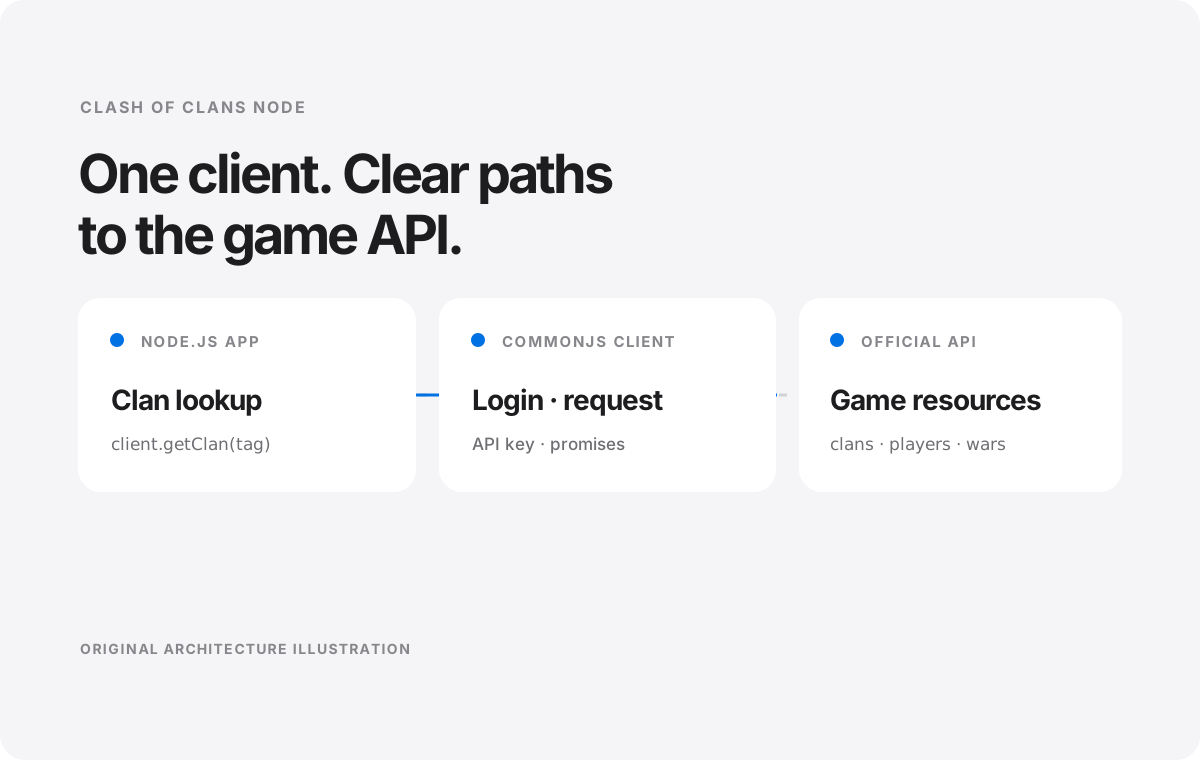
Original illustration of a CommonJS Node.js package connecting an application to Clash of Clans API resources.
An original package illustration, rather than an application screenshot.

Overview

Clash of Clans Node is a JavaScript package that wraps the official Clash of Clans API with promise-based resource methods. The linked public repository documents a CommonJS client with login-based authentication and methods for players, clans, wars, leagues, and more.

What it does

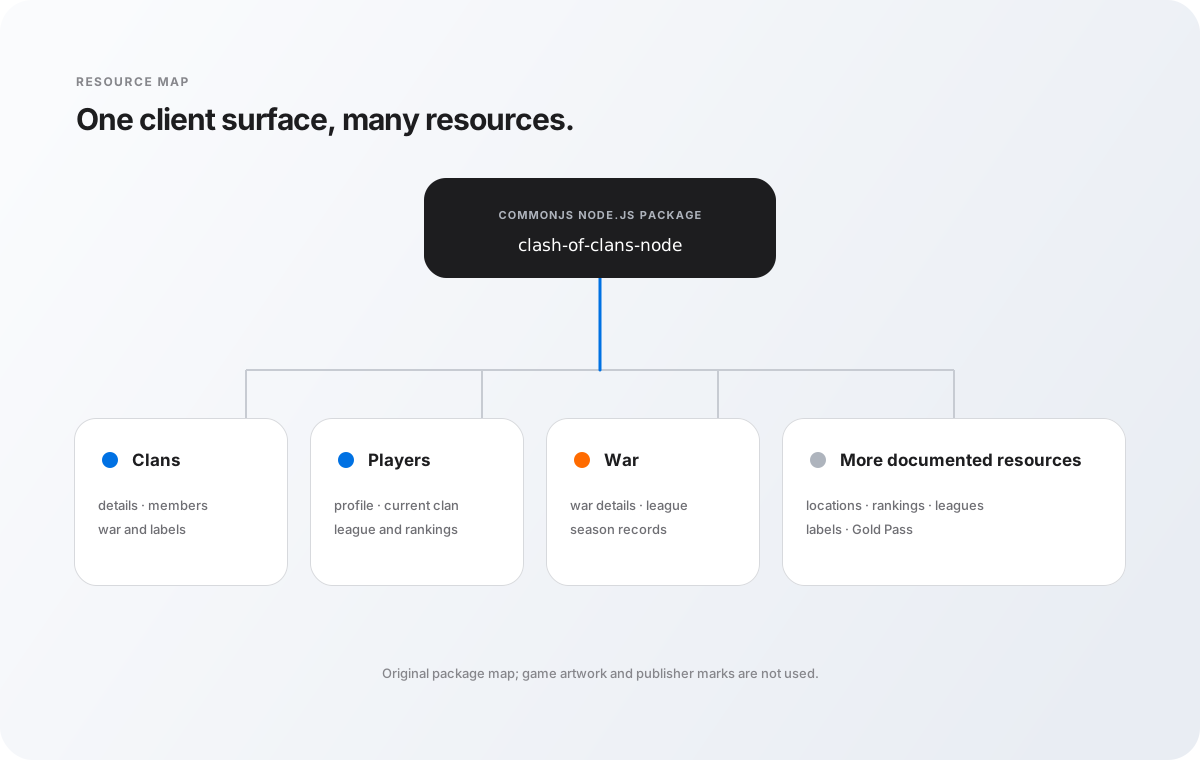
  • Clan methods cover details, members, searches, current wars, war logs, war-league data, and Capital Raid seasons.
  • Player methods retrieve profiles and verify a player’s in-game API token.
  • The documentation lists league and season data, locations and rankings, clan and player labels, and Gold Pass information.
  • Calls return promises, allowing a Node.js application to await API results.

Engineering notes

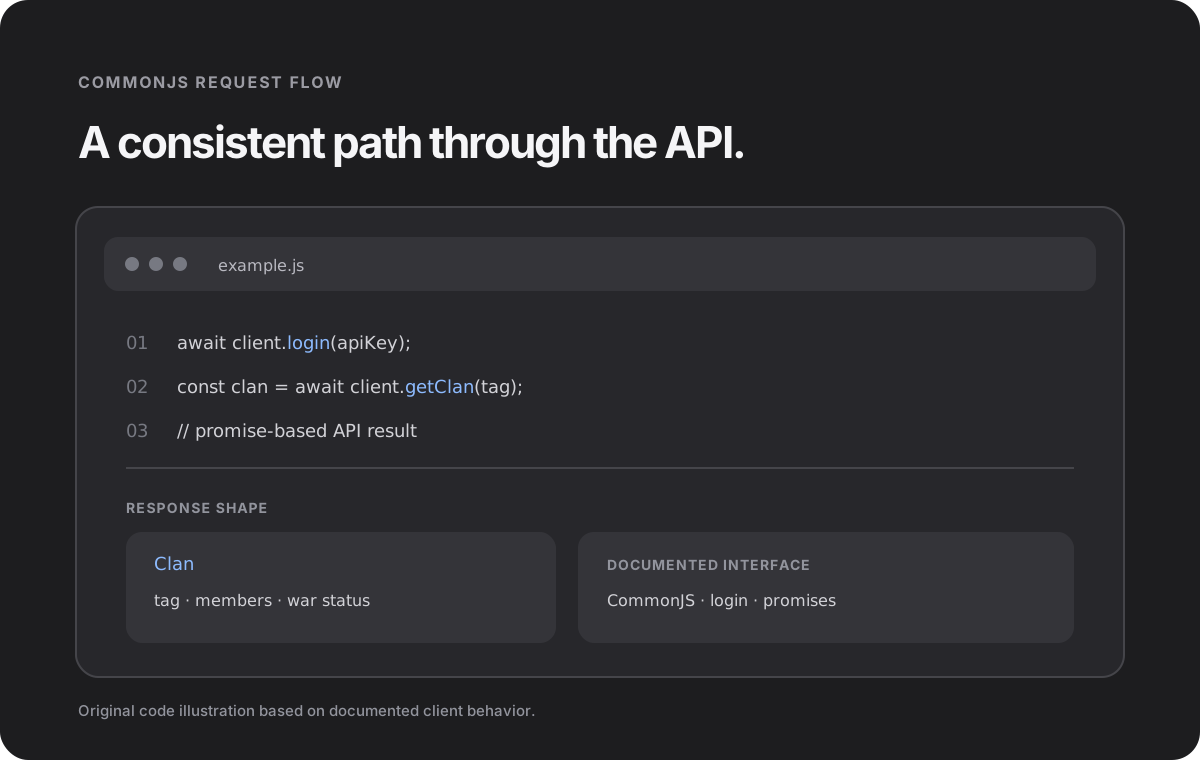
  • The documented setup loads the package with require(), authenticates through client.login(), then calls resource methods.
  • The linked package manifest identifies the module as CommonJS and declares Node.js 16.18.0 with node-fetch.
  • The documentation groups convenience methods by Clash of Clans resource and explains their inputs.

Project notes

Purpose

Clash of Clans Node is a reusable wrapper for the official Clash of Clans API, not a game or a bot. The linked repository documents a JavaScript package with a CommonJS interface and asynchronous methods for requesting game data.

Resource interface

Its documentation covers player and clan lookups, wars and raids, leagues and season rankings, locations, labels, and Gold Pass data. These methods offer Node.js applications a direct way to reach the different parts of the API through a consistent login-and-request pattern.

Published implementation

The linked public repository currently describes a CommonJS package: applications load it with require(), call client.login() with a developer key, then await methods such as getClan() or getPlayer(). Its package manifest declares Node.js 16.18.0. This portfolio describes that published implementation, rather than the newer typed ESM client described in earlier project notes.