TypeScript API client

Brawl Stars Node

A TypeScript client for player, club, brawler, ranking, and event data from the official Brawl Stars API.

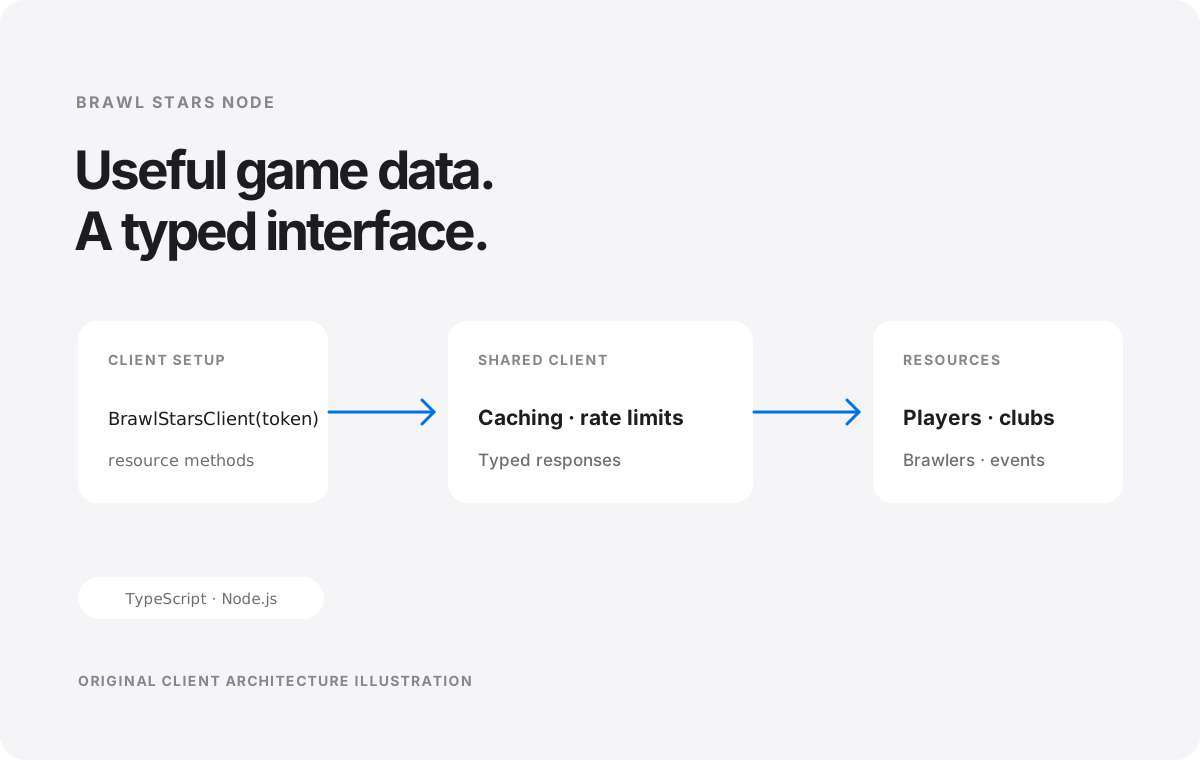
Original architecture illustration connecting a typed Brawl Stars client, resource methods, and API results.
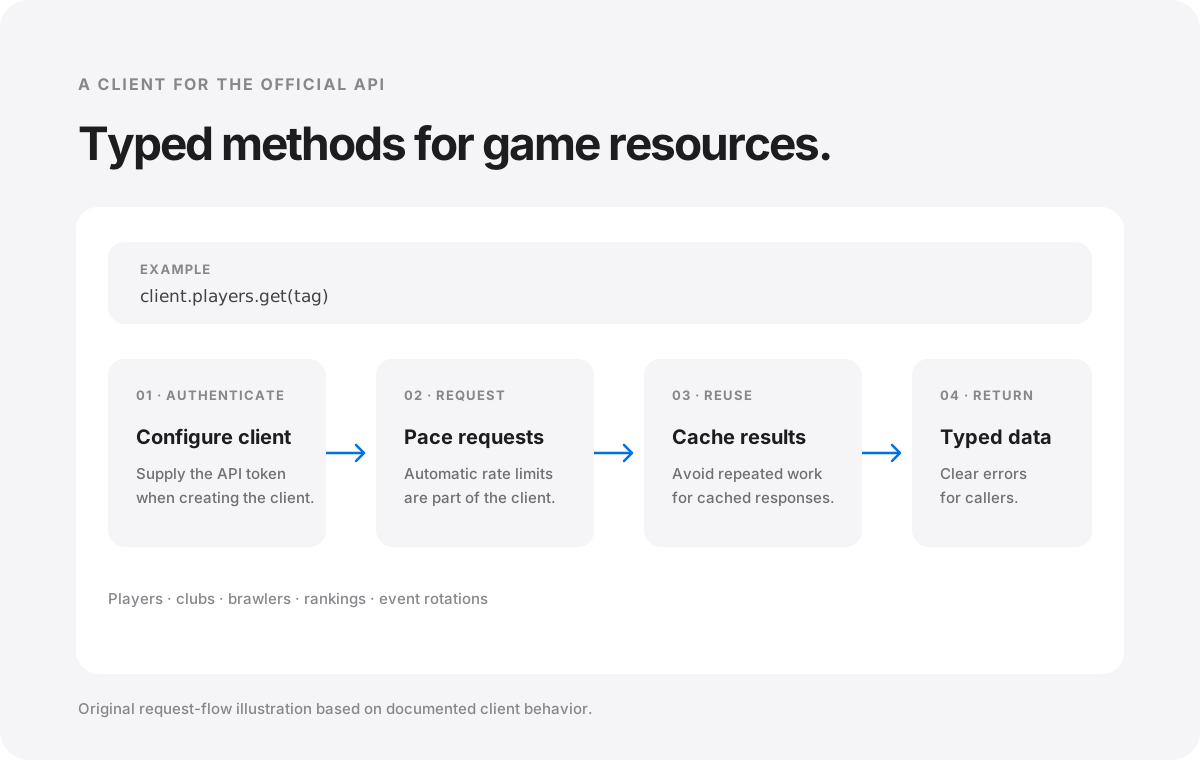
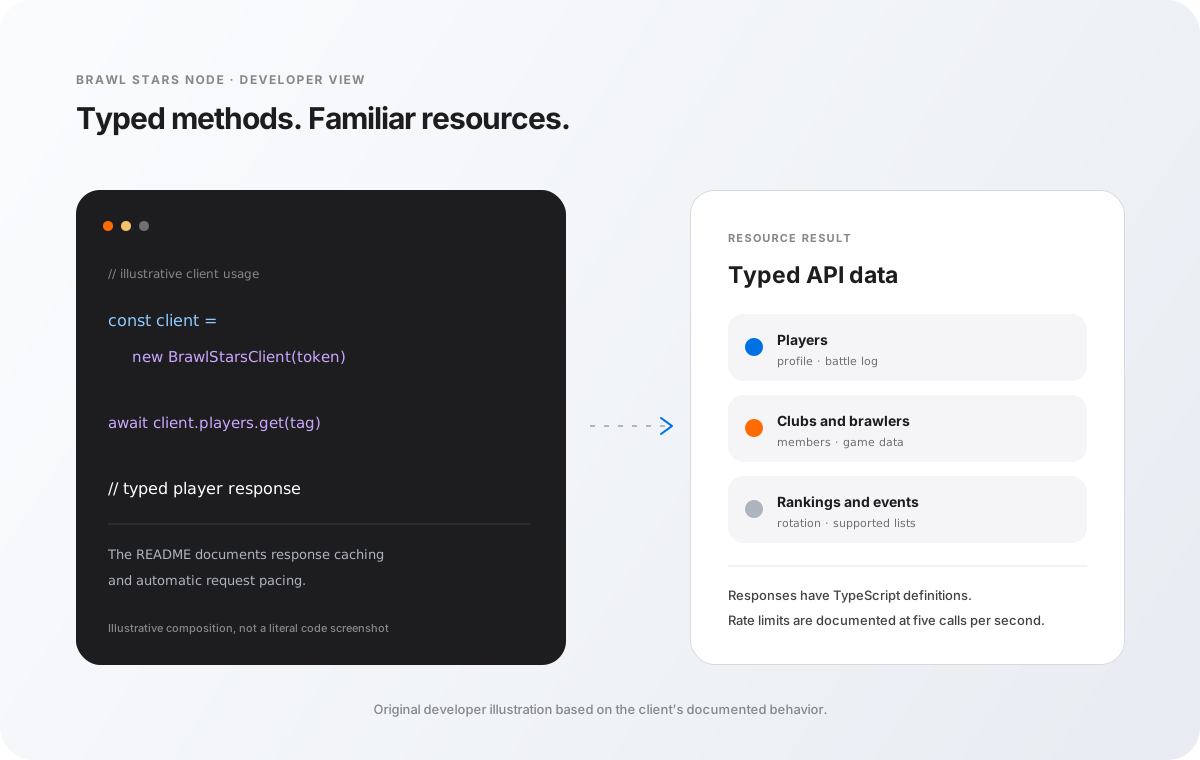
An original illustration of the client’s documented resource interface.

Overview

Brawl Stars Node packages the official Brawl Stars API behind a Node.js client. A token-configured BrawlStarsClient exposes resource methods and typed responses, while its documented cache and request pacing reduce repeated work for package users.

What it does

  • Player methods retrieve profiles and recent battle logs; club methods retrieve club details and member lists.
  • Ranking methods cover players, clubs, and individual brawlers, alongside brawler data and current event rotations.
  • The README documents response caching and automatic rate limiting at five requests per second.
  • Resource methods return structured TypeScript response types through the BrawlStarsClient interface.

Engineering notes

  • Callers configure the API token once when creating BrawlStarsClient, then use resource methods such as players.get(tag).
  • TypeScript response definitions make the package results easier to consume from typed Node.js projects.
  • The repository documents Jest tests and an integrated continuous-integration workflow.

Project notes

Purpose

Brawl Stars Node is a reusable TypeScript wrapper for the official Brawl Stars API. A Node.js project can create one client with its API token and request game resources through named methods rather than assembling each call from scratch.

Resource interface

The README documents player profiles and battle logs, clubs and their members, player and club rankings, brawler rankings and data, and event rotations. It also describes response caching, automatic request pacing, structured response types, and Jest-based checks.

Design focus

The public API keeps authentication at client setup and groups calls by resource. That gives consumers a familiar place to find player, club, brawler, ranking, and event methods, while the README’s documented rate limit and cache address two repeated concerns when working with a remote game API.